




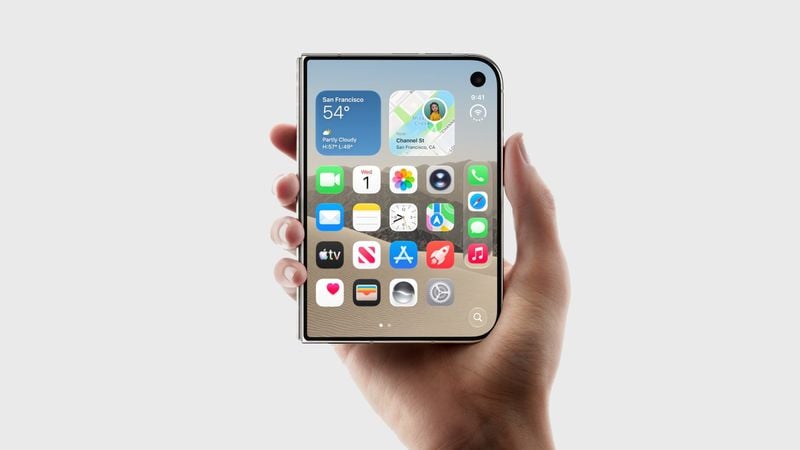


Apple is considering four major upgrades for future iPhone Duo models as it works to improve the design, security and functionality of its foldable smartphone lineup.
According to Bloomberg’s Mark Gurman, the technology giant wants to introduce Face ID, an Action button, a telephoto camera and a thinner, lighter design across future generations of the device.
However, the company may not deliver one of its most anticipated features as early as expected.
Gurman reports that Apple has already developed prototypes of the iPhone Duo 2 featuring Face ID built into the outer display. Despite this progress, the company is reportedly running out of time to finalise the technology for the device, raising the possibility that Apple could postpone its introduction until the iPhone Duo 3.
The potential delay highlights the engineering challenges involved in bringing advanced authentication technology to foldable smartphones, where manufacturers must balance display design, internal components and usability.
Beyond Face ID, the proposed Action button could give users quicker access to frequently used functions, while a telephoto camera would strengthen the device’s photography capabilities. Apple also appears keen to make subsequent models thinner and lighter, addressing two design considerations that could influence the appeal of foldable phones.
Why it matters
Apple’s approach suggests that it wants to compete in the foldable smartphone market through more than just a flexible display. A combination of improved security, better photography, easier access to controls and a more portable design could help distinguish its devices from competing foldables.



For consumers, however, the timing of these upgrades matters as much as the features themselves. If Face ID misses the iPhone Duo 2, Apple may have to rely on other improvements to make the next generation feel like a meaningful step forward.
Ultimately, Apple’s challenge will be to ensure that its foldable iPhones offer practical advantages over conventional smartphones rather than simply introducing a new form factor.