






Software development teams may soon spend less time checking and approving routine code changes as artificial intelligence company Anthropic introduces a new tool that allows AI agents to review, fix and approve developers’ work.
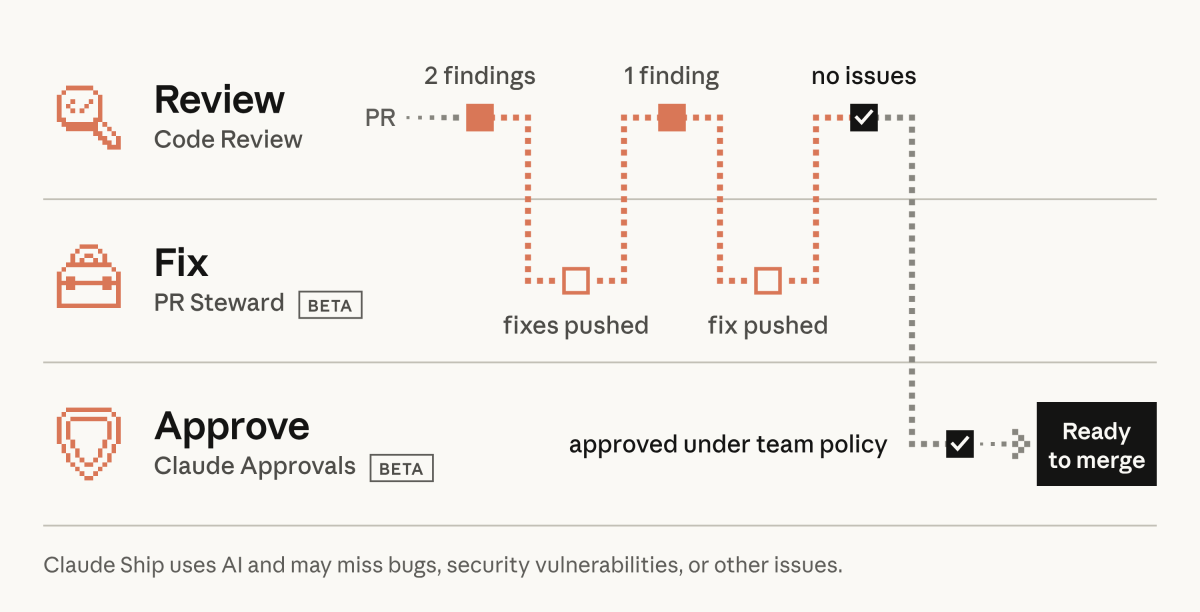
The company unveiled Claude Ship on Monday, a suite of AI-powered tools designed to automate activities that take place after developers write code, particularly reviewing proposed changes, resolving technical issues and deciding whether updates are ready to be merged into a software project.
Unlike conventional AI coding assistants that primarily generate or review code, Claude Ship introduces an approval agent that can authorise changes based on rules established by a development team.
Information gathered by Bzzyer shows that the launch targets a growing challenge in software engineering: AI tools are generating code faster, but human developers still have to review, test and approve much of that work before it reaches production.
Anthropic believes automating these final stages could help development teams keep pace with the increasing volume of code produced by AI agents.
“Most teams want a person to approve every change, and that’s easy to keep up with when people write every line. But a lot of developers build with agents now,” the company explained in a blog post.
Anthropic added that Claude writes most of the code used by its Claude Code team, prompting it to automate more of the processes that follow code generation.
How Claude Ship works
Claude Ship combines three tools: Code Review, PR Steward and Claude Approvals.



Code Review, which is already generally available, examines proposed code changes and identifies potential problems before developers merge them into a project.
PR Steward, currently in beta, takes the process further by addressing issues such as failed continuous integration checks, merge conflicts and feedback generated during code reviews.
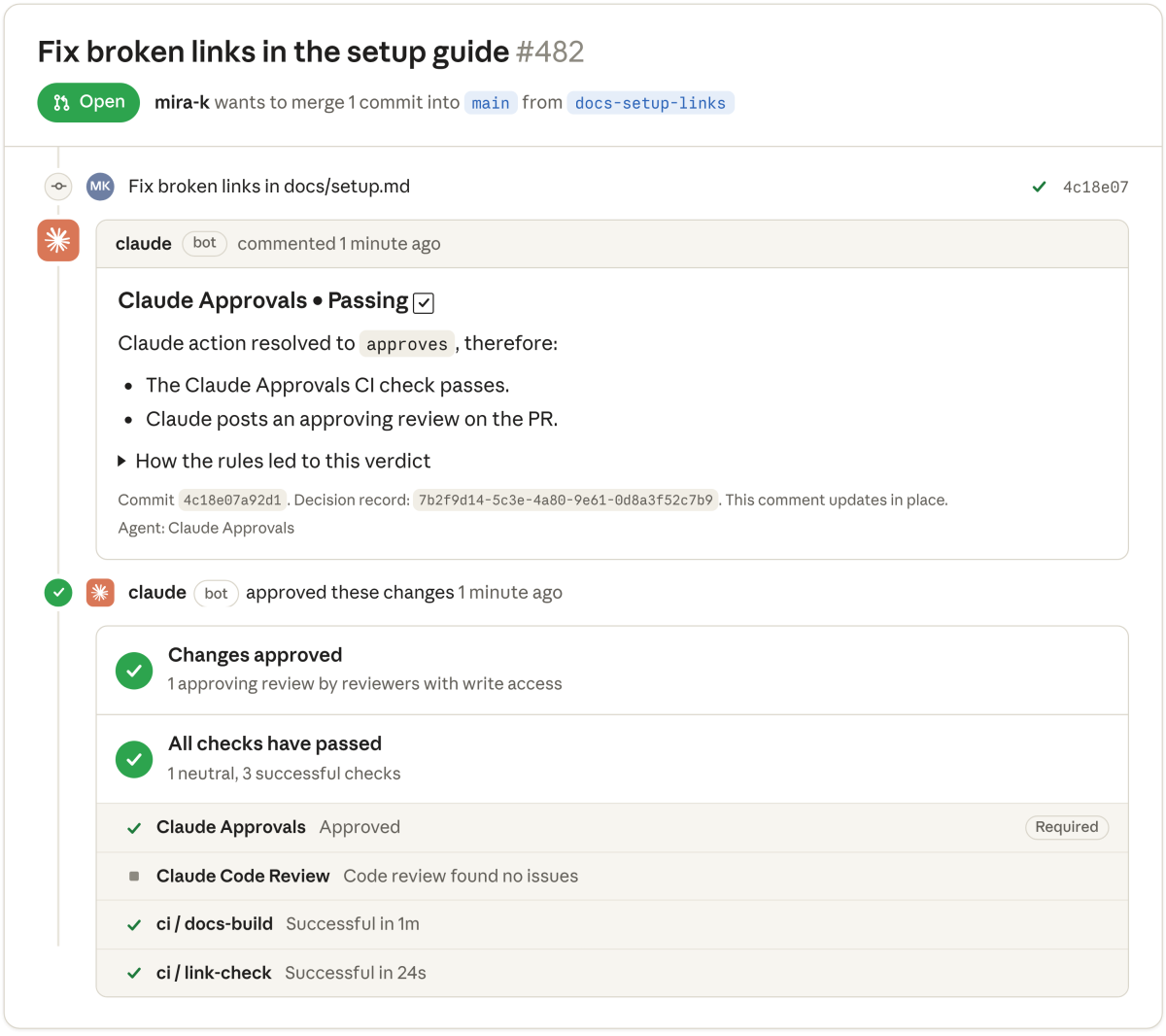
The agent also provides comments after each new code submission, explaining the changes it made and how developers can reverse them if necessary.
Claude Approvals is the most significant addition because it allows development teams to delegate approval decisions to an AI agent.
Teams can create approval policies in their repositories using natural language. The agent then evaluates proposed changes against those rules, drawing on information such as Code Review findings and the team’s own classification systems.
This means developers can establish which changes qualify for automatic approval and which require human intervention.
Anthropic keeps human oversight in the process
Despite introducing automated approvals, Anthropic is not recommending that development teams immediately hand over all their software approval responsibilities to AI.
The company advises early adopters to begin with an observation-only setting, allowing Claude Approvals to assess proposed changes without actually approving them.
Teams can also test the system on a single repository before expanding its use, while setting monthly spending limits to manage costs.
Anthropic says organisations will retain control over where Claude Ship operates, the depth of reviews and the changes that must go to human reviewers.
Available review settings include Quick, Standard and Deep, giving teams different levels of scrutiny depending on the nature of their projects.
Claude Ship is rolling out in beta to customers on Anthropic’s Claude Team and Enterprise plans using GitHub repositories. Code Review is generally available, while PR Steward and Claude Approvals remain in beta.
Why automated code approval matters
Claude Ship reflects a broader change in software development: the challenge is shifting from how quickly developers can produce code to how safely organisations can review and release it.
As AI coding agents generate larger volumes of software, human review can become a bottleneck. Automating routine checks and approvals could help companies release updates faster, reduce repetitive engineering work and allow developers to focus on more complex problems.
However, allowing an AI system to approve code introduces another layer of risk. A system that overlooks a security flaw, misunderstands a business rule or approves a faulty change could introduce problems into software used by thousands or millions of people.
For Nigerian technology companies, fintechs, software startups and digital service providers, the development could eventually offer a way to improve engineering productivity without expanding development teams at the same pace as their workloads.
But speed alone should not determine adoption. Companies handling financial transactions, customer records and other sensitive information would need clearly defined approval rules, reliable testing and human oversight for high-risk changes.
The important question is no longer whether AI can write code. It is whether organisations can trust AI to decide which code is safe enough to release.
With Claude Ship, Anthropic is attempting to move that decision further into the hands of AI agents.