



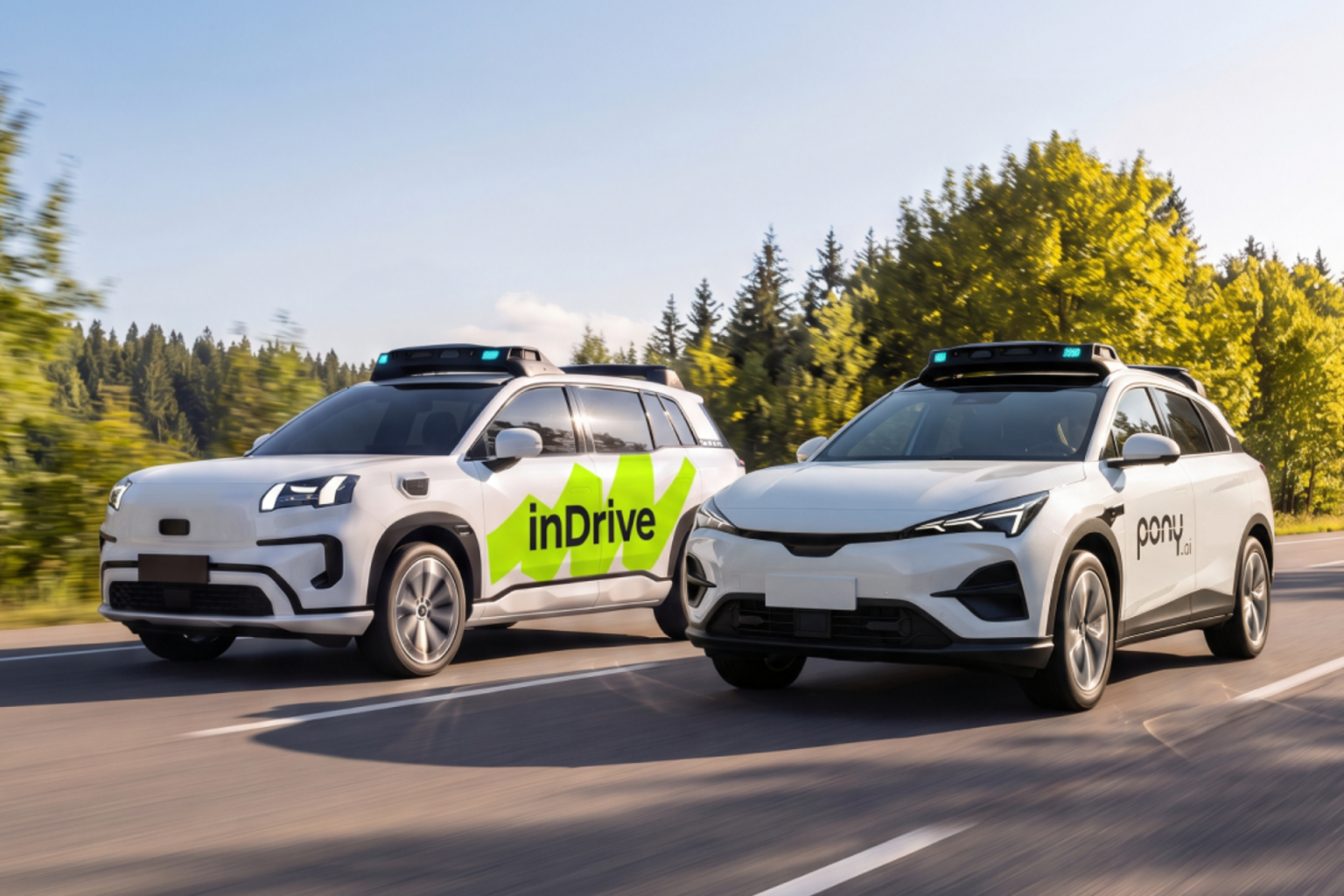


Ride-hailing company inDrive has partnered with Chinese autonomous driving firm Pony.ai and US chipmaker Nvidia to explore launching robotaxi trials in Kazakhstan in 2027, as the company seeks to extend its affordable transport model into self-driving mobility.
The three companies signed a memorandum of understanding on Friday to explore integrating Pony.ai’s autonomous vehicles into inDrive’s ride-hailing platform. The proposed partnership reflects a growing push to expand robotaxi services beyond established markets such as the United States and China.
InDrive Chief Technology Officer Yuri Misnik told a source that the companies plan to begin testing the vehicles in Astana, Kazakhstan’s capital, during the first half of 2027. The initial trials will include safety operators behind the wheel, with the partners aiming to introduce fully driverless rides eventually.
Under the proposed arrangement, Pony.ai will supply its seventh-generation robotaxis, which inDrive plans to make available through its app and operate in Kazakhstan. Nvidia will provide supporting artificial intelligence technology through its Hyperion autonomous-driving platform and Halos safety system.


The partnership could test whether robotaxis can compete on affordability in markets where passengers already expect relatively inexpensive rides. For inDrive, which allows passengers and drivers to negotiate fares, the challenge will be to introduce costly autonomous technology without undermining the price-conscious appeal that helped the company expand across emerging markets.
inDrive bets on affordability as robotaxi competition grows
The planned Kazakhstan trials come as ride-hailing companies accelerate their investments in autonomous transport.
Earlier this month, Uber announced plans to test Pony.ai’s robotaxis in London. Uber has also begun offering supervised autonomous rides with British startup Wayve and is working with several robotaxi developers in other markets, including the Middle East.
Rather than develop its own autonomous-driving technology from scratch, inDrive intends to rely on specialised partners to provide vehicles, software and computing infrastructure.
“Our approach is capital-light by design,” Misnik said, explaining that the company works with different partners across markets to combine their expertise and improve the customer experience.
This strategy could help inDrive limit the expense of developing self-driving systems internally. However, the company will still need to establish how the partners will divide operational responsibilities, manage safety and maintain competitive fares as the technology moves from testing to commercial deployment.
Nvidia argues that its Hyperion platform can reduce development costs by giving autonomous-driving companies access to an integrated foundation of sensors and computing technology, rather than requiring them to build every component independently.
The company also offers its Alpamayo model and tools for generating synthetic data, allowing developers to simulate driving conditions and test autonomous systems against a wider range of scenarios.
Nvidia Vice President of Automotive Ali Kani told a source that these potential savings were particularly important in emerging markets, where existing ride-hailing fares are relatively affordable and autonomous services must remain cost-competitive.
The announcement coincided with Nvidia chief executive Jensen Huang’s first visit to Kazakhstan on Friday, highlighting the Central Asian country’s growing interest in advanced technology and artificial intelligence.
Kazakhstan’s harsh winters offer a major test
Kazakhstan could provide a demanding environment for testing autonomous vehicles because of Astana’s prolonged winters, heavy snowfall and icy roads.
The city, which has a population of approximately 1.7 million, experiences weather conditions that can complicate how vehicles detect road markings, identify obstacles and navigate changing road surfaces.
For autonomous-driving developers, successful trials in such conditions could provide valuable information about whether their systems can operate reliably outside the relatively controlled environments often associated with early robotaxi deployments.
inDrive founder and chief executive Arsen Tomsky said the trials would offer an opportunity to evaluate autonomous-driving technology in challenging winter conditions. He added that the experience could inform expansion into other locations with similar weather patterns.
Kazakhstan has already announced plans to introduce autonomous taxi services in 2027, with initial trials planned for Astana and two other cities. The country has also introduced rules permitting autonomous vehicles to undergo testing on designated public roads.
The regulatory environment could prove just as important as the technology itself. Snow and ice will test the vehicles’ capabilities, but authorities must also establish clear safety requirements and operating conditions before companies can move from supervised trials to fully driverless services.
Misnik said inDrive considers a supportive regulatory framework essential for safe and sustainable testing, adding that the company is examining other potential markets for future deployments.
inDrive expands robotaxi ambitions beyond Central Asia
The Kazakhstan initiative forms part of inDrive’s wider effort to explore autonomous mobility in multiple regions.
In December, the company signed a separate agreement with Saudi Arabia’s AI Driver to investigate deploying autonomous vehicles powered by Chinese self-driving technology company WeRide, initially targeting Riyadh.
The partners had aimed to launch a pilot during the first half of 2026, although it remains unclear whether the trials have begun.
Pony.ai is also expanding its international ambitions. The company aims to operate more than 3,500 robotaxis across over 20 cities worldwide by the end of 2026, up from a fleet of 1,975 vehicles at the end of June.
For inDrive, which operates in more than 1,200 cities across 47 countries, autonomous transport would add another layer to a business that already spans ride-hailing, delivery, intercity transportation and financial services.
The company’s next challenge will be to turn these partnerships into commercially viable services. Robotaxis must demonstrate not only that they can navigate unfamiliar roads and extreme weather but also that they can deliver reliable journeys at prices passengers are willing to pay.
If the Kazakhstan trials proceed as planned, they could help establish whether inDrive’s partnership-led approach can bring autonomous transport to markets where affordability, infrastructure and local regulations will shape adoption as much as technological advances.